Tag: broken trust

  • The Anchor Line Support When You Need It

    The Anchor Line Support When You Need It

    WELLBEING

    Why I Built The Anchor Line

    There are moments when talking feels impossible.

    You might know you need support, but the thought of saying the words out loud makes your chest tighten. You may open a message, type a few words, delete them, and then tell yourself you are being silly. You may convince yourself that other people have it worse, that you should cope, that you should wait until you can explain it properly.
    But pain does not always arrive in neat sentences.

    Sometimes it shows up as overwhelm. Sometimes it looks like silence. Sometimes it feels like sitting with your phone in your hand, wanting someone steady to reach back, but not knowing where to begin.
    That is one of the reasons I built The Anchor Line.


    I wanted to create a gentle form of support for people who may not feel ready for a phone call, a video session, or a full coaching conversation. I wanted there to be another way in. Something calmer. Something quieter. Something that still felt human.


    Because support should not only be available to people who can speak clearly when they are struggling.
    In this post, I want to share why I created The Anchor Line, who it is for, and why text-based support can feel so powerful for people affected by trauma, emotional overwhelm, difficult relationships, or simply the weight of carrying too much for too long.

    You do not have to be ready for a full conversation to deserve support

    Why I Built The Anchor Line

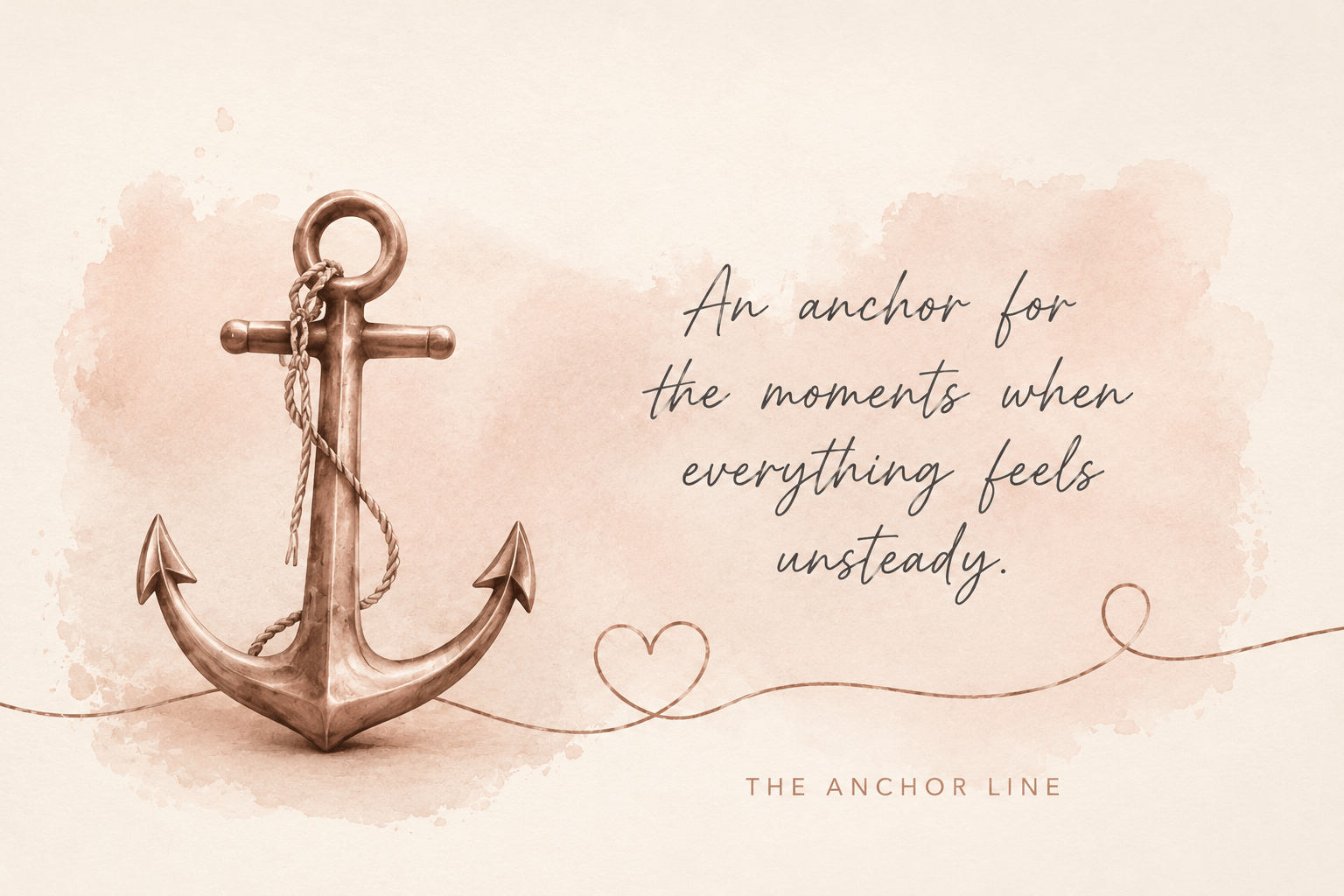
    An anchor does not rush you forward. It simply helps you steady

    It helps you make sense of your experiences

    Some people need time before words come. Some people need space to think. Some people need to type, pause, breathe, read it back, and then decide whether they want to send it.

    That does not make their need for support any less real.

    But in real life, healing often starts much smaller.

    I wanted to offer something steady and accessible. A place where someone could send a message without feeling they had to perform, explain everything perfectly, or have a full plan for what they needed.


    Because sometimes the message is simply:


    โ€œI donโ€™t know what to do.โ€


    Or:


    โ€œI feel overwhelmed.โ€


    Or:


    โ€œI just need someone to help me slow down.โ€


    And those messages deserve care.


    I did not build The Anchor Line to replace deeper support. I built it to create a softer first step. A bridge. A way for someone to reach out when talking feels too much, but staying alone with it feels too heavy.


    There is something powerful about written words. They give us room. They do not rush us in quite the same way. They can help us name what is happening one sentence at a time.


    For someone whose nervous system feels on high alert, that slower pace can make a difference.
    A phone call may feel too exposing. A video session may feel too intense. Sitting across from someone may feel impossible. But sending a message from the sofa, the car, the kitchen table, or the edge of the bed may feel just about manageable.


    And sometimes โ€œjust about manageableโ€ is exactly where support needs to begin.


    Another key takeaway is this: support does not have to feel overwhelming to be meaningful.

    โ€œSometimes healing begins with one honest message: Iโ€™m not okay today.โ€

    a pink water background with a book pen cup and throw offering text based support

    YOU MATTER

    The name The Anchor Line

    The name The Anchor Line felt right because an anchor does not drag you forward before you are ready. It does not shout instructions from the shore. It does not ask you to explain why the water feels rough.

    GENTLE SUPPORT

    You do not have to keep working through it on your own.

    Trauma-informed coaching can offer a calm, supportive space to reflect, rebuild, and move forward at a pace that feels safe for you. You can begin where you are.


    WRITTEN BY LANA ELLIOTT

    Lana Elliott is a trauma-informed life coach and wellbeing writer. Lana supports adults affected by trauma, difficult life experiences, and domestic abuse through calm, client-led coaching and gentle, trauma-informed resources.

    LANA ELLIOTT WELLBEING

  • When Saying Yes Is a Survival Strategy

    When Saying Yes Is a Survival Strategy

    WELLBEING

    When Saying Yes Is a Survival Strategy: People-Pleasing as a Trauma Response

    There’s something I want you to know โ€” if you’ve spent your whole life putting everyone else first, it might not be because you’re “just a nice person”…

    When Saying Yes Is a Survival Strategy: People-Pleasing as a Trauma Response

    What People-Pleasing Really Is

    There’s something I want you to know โ€” if you’ve spent your whole life putting everyone else first, it might not be because you’re “just a nice person.” It might be because, somewhere along the way, being agreeable became the safest thing you could do.

    I know, because I’ve been there.

    For years, I said yes to things I didn’t want to do. I smiled when I was hurting. I made myself smaller so other people could feel bigger. And I thought that was just who I was โ€” a people-pleaser, a giver, someone who cared too much.

    But the truth is, people-pleasing wasn’t a personality trait. It was a survival strategy. And it took me a long time to understand the difference.

    When we grow up in environments where expressing our needs was unsafe โ€” where saying no led to anger, punishment, withdrawal of love, or worse โ€” we learn to read the room. We learn to anticipate what other people want before they even ask. We learn that the safest version of ourselves is the one that causes the least disruption.

    This is called fawning, and it’s actually a trauma response โ€” just like fight, flight, or freeze. It’s the nervous system’s way of keeping us safe by making us agreeable, accommodating, and invisible.

    The trouble is, what kept us safe as children can quietly destroy us as adults.

    People-pleasing was not a personality trait. It was a survival strategy.

    The Hidden Cost of Always Saying Yes

    People-pleasing might look generous from the outside. But underneath, it often feels like exhaustion, resentment, and a slow disappearing act.

    You might recognise some of these feelings:

    • You feel responsible for everyone else’s emotions. If someone around you is upset, you immediately feel like it’s your fault โ€” or your job to fix it.
    • You struggle to say no. Even when you’re running on empty, the thought of disappointing someone feels physically uncomfortable.
    • You don’t know what you actually want. You’ve spent so long tuning in to other people’s needs that your own have gone quiet.
    • You feel guilty for resting. Doing nothing feels selfish, even when your body is begging you to stop.
    • You attract people who take more than they give. Because you’ve been trained to over-give, you may find yourself in relationships that feel one-sided.

    If you’re nodding along, please hear me โ€” this isn’t a flaw. This is your nervous system doing exactly what it learned to do. And the beautiful thing is, what was learned can be unlearned.

    The Hidden Cost of Always Saying Yes

    Why It’s So Hard to Stop

    Here’s the part that nobody really talks about: stopping people-pleasing can feel genuinely terrifying.

    When your survival has depended on keeping others happy, the idea of prioritising yourself can trigger a deep, physical sense of danger. Your body might react with panic, guilt, or shame โ€” not because you’re doing something wrong, but because you’re doing something unfamiliar.

    This is why willpower alone doesn’t work. You can’t just decide to stop people-pleasing and expect your nervous system to get on board overnight. It’s not a mindset problem โ€” it’s a body-level pattern that needs gentle, patient rewiring.

    And that’s okay. Healing doesn’t have to happen all at once.

    What kept you safe as a child can quietly exhaust you as an adult.

    Small Steps Toward Putting Yourself Back in the Picture

    If you’re reading this and thinking, “But where do I even start?” โ€” I want to offer you some gentle starting points. Not a complete overhaul, just small, brave steps.

    1. Start Noticing

    Before you change anything, just notice. When you say yes to something, pause and ask yourself: Do I actually want to do this, or am I afraid of what happens if I don’t?

    There’s no judgment here. Just awareness. That awareness alone is a powerful first step.

    2. Practice the Pause

    You don’t have to answer immediately. When someone asks you for something, try saying: “Let me think about that and get back to you.” It’s a complete sentence. You don’t owe an instant response.

    This tiny pause creates space between the request and your automatic “yes” โ€” and in that space, you get to choose.

    3. Let Go of Over-Explaining

    When you do say no, you don’t need to justify it with a list of reasons. “I can’t do that” or “That doesn’t work for me” are enough. I know it feels uncomfortable, but the more you practise, the more natural it becomes.

    4. Get Curious About Guilt

    Guilt will show up โ€” probably a lot. But try to get curious about it rather than letting it drive your decisions. Ask yourself: Is this guilt telling me I’ve done something wrong, or is it just telling me I’ve done something unfamiliar?

    Most of the time, it’s the latter.

    5. Start With the Small Things

    You don’t have to set a huge boundary with the most difficult person in your life tomorrow. Start small. Choose where you want to eat. Say you’d prefer a different time. Admit that you’re tired and need to rest.

    These small acts of honesty build the muscle for bigger ones later.

    6. Find Safe People

    Recovery from people-pleasing is so much easier when you have even one person who makes it safe to be yourself โ€” someone who won’t punish you for having needs. That might be a friend, a support worker, or a coach. You deserve to be around people who don’t require you to shrink.

    You Were Never “Too Much” โ€” You Were Just Surviving

    If there’s one thing I want to leave you with, it’s this: the fact that you’ve spent your life looking after everyone else doesn’t mean you’re weak. It means you found a way to survive something bigger than you.

    But you’re not in that situation anymore. And you’re allowed to take up space now. You’re allowed to have needs. You’re allowed to say no without apologising. You’re allowed to choose yourself โ€” not instead of everyone else, but as well as everyone else.

    That’s not selfish. That’s healing.

    And if you’re not sure where to start, or you just need someone to sit with you while you figure it out โ€” I’m here. That’s exactly what my coaching is for. Gentle, trauma-informed, no pressure. Just a safe space to begin finding your way back to yourself.

    You can reach out to me at [lanaelliottwellbeing.co.uk](https://lanaelliottwellbeing.co.uk) whenever you’re ready.

    If you or someone you know is affected by domestic abuse, support is available:

    • National Domestic Violence Helpline: 0808 2000 247 (24 hours, freephone)
    • Refuge: [refuge.org.uk](https://www.refuge.org.uk)
    • In an emergency, always call 999.

    You are allowed to take up space. You are allowed to say no.

    YOUR NEEDS MATTER TOO

    GENTLE SUPPORT

    You do not have to keep working through it on your own.

    Trauma-informed coaching can offer a calm, supportive space to reflect, rebuild, and move forward at a pace that feels safe for you. You can simply begin where you are.


    WRITTEN BY LANA ELLIOTT

    Lana Elliott is a trauma-informed life coach and wellbeing writer. Lana supports adults affected by trauma, difficult life experiences, and domestic abuse through calm, client-led coaching and gentle, trauma-informed resources.

    LANA ELLIOTT WELLBEING

  • Building Trust Again: Small Steps That Make a Big Impact

    Building Trust Again: Small Steps That Make a Big Impact

    Lana Elliott

    Through both her coaching and her writing, Lana aims to create spaces where people feel seen, heard, and supported as they begin to heal and move forward.

    Trust forms the foundation of every meaningful relationship, whether personal or professional. When it is gone, it can feel daunting to think about rebuilding trust instead of focusing on what youโ€™ve lost. But with patience, steady effort, and the right approach, it is possible to form connections that are even stronger than before.
    Understanding

    Trust: Why It Matters So Much


    Trust isnโ€™t just a nice thing to have in relationships; itโ€™s essential for our emotional well-being and mental health. When trust is damaged, our nervous system can react as if weโ€™re under threat, making it harder to feel safe and secure with others.


    Recognising that breaks in trust can trigger old wounds is essential. This awareness helps us approach rebuilding with compassion rather than frustration.
    Trust grows through small, repeated actions rather than big, dramatic gestures

    Hands hold a paper heart that has been torn and taped back together.
    Healing after hurt can be messy, careful, and deeply human.

    Building trust is a process. Trust results from consistent and predictable interaction over time.


    The Science Behind Trust Building


    Research shows that trust grows through small, repeated actions rather than big, dramatic gestures. Neuroscientist Paul Zakโ€™s work suggests trust increases oxytocin production. Often called the โ€œbonding hormone, ” Oxytocin helps us feel calmer and more connected. Helping us better understand other peopleโ€™s feelings.


    Other studies also show that our brains look for patterns when deciding whether to trust someone. When someone behaves steadily and predictably, our nervous system learns that it is safe to relax. This lowers stress hormones like cortisol, making it easier for us to open up and build healthy relationships.


    Trust-building is linked to โ€œco-regulationโ€. This means that when we feel safe with another person, our bodies naturally start to calm down by picking up on their tone of voice, facial expressions, and gestures. Over time, these small moments help rebuild a sense of safety, even after trust has been broken.


    Small Steps That Create Big Changes

    Start with Self-Trust

    Before rebuilding trust with others, it’s vital to cultivate trust within yourself. This means:

    Practising self-compassion: Treat yourself with the same kindness you’d show a good friend

    Keeping promises to yourself: Follow through on commitments you make to yourself.

    Honouring your boundaries: Respect your own limits and communicate them clearly.

    Before rebuilding trust with others, it’s vital to cultivate trust within yourself. This means:

    • Keeping promises to yourself: Follow through on commitments you make to yourself.
    • Honouring your boundaries: Respect your own limits and communicate them clearly.
    • Practising self-compassion: Treat yourself with the same kindness you’d show a good friend

    2. Master the Art of Micro-Commitments

    Large promises can feel overwhelming and increase pressure. Instead, focus on tiny, achievable commitments:

    • Arriving exactly when you say you will
    • Responding to messages within the timeframe you’ve promised
    • Following through on small tasks consistently

    These micro-commitments create a foundation of reliability that gradually rebuilds confidence.

    3. Embrace Radical Honesty (With Kindness)

    Honesty is non-negotiable in trust building, but it must be delivered with care:

    • Be truthful about your limitations: “I’m not sure I can commit to that right now”
    • Acknowledge mistakes quickly: Address errors before they compound
    • Share your feelings appropriately: Express emotions without overwhelming others

    4. Practice Active Listening

    Trust grows when people feel truly heard and understood:

    • Put away distractions during conversations
    • Reflect what you’ve heard: “It sounds like you’re feeling…”
    • Ask clarifying questions to show genuine interest
    • Avoid immediately offering solutions unless asked

    5. Create Predictable Patterns

    Consistency builds trust more effectively than perfection. Establish reliable patterns in:

    • Communication: Regular check-ins or updates
    • Behaviour: Consistent responses to similar situations
    • Availability: Clear boundaries around when you’re accessible


    The process of rebuilding trust is not a single, grand gesture but a journey made up of these small, consistent actions. Each apology, each commitment kept, and each moment of transparency serves as a positive data point, slowly replacing the negative ones that caused the initial break. By focusing on these manageable steps, you shift the narrative from the damage of the past to the hopeful construction of a more resilient, honest future, one small act of trust at a time.

    Trust-Building Exercises for Relationships

    The Weekly Trust Check-In

    Set aside 15 minutes weekly to discuss:

    • What actions built trust this week?
    • What moments felt challenging?
    • What would feel supportive moving forward?

    The Appreciation Practice

    Daily, share one specific thing you appreciated about the other person’s trustworthy behaviour. This reinforces positive patterns and builds emotional safety.

    The Transparency Exercise

    Choose one area where you could be more open and gradually increase vulnerability. Start smallโ€”perhaps sharing a minor worry or hope.

    Navigating Setbacks: When Trust Feels Fragile

    Rebuilding trust isn’t linear. Expect setbacks and approach them with curiosity rather than judgement:

    • Normalise the process: Healing isn’t straightforward
    • Return to basics: Go back to simple, consistent actions
    • Seek support: Consider professional guidance when needed

    Creating Boundaries That Build Trust

    Healthy boundaries actually enhance trust by:

    • Providing clear expectations
    • Preventing resentment from building
    • Demonstrating self-respect and other-respect

    Remember: saying “no” to preserve your well-being is a trustworthy act.

    The Role of Time and Patience

    Trust building operates on emotional time, not calendar time. Some days will feel like significant progress, others like you’re moving backwards. This is normal and part of the healing process.

    Research suggests it takes an average of 66 days to form a new habit. Rebuilding trust in relationships often takes much longer. Sometimes a matter of months or even years, depending on the situation.

    When to Seek Professional Support

    Consider working with a trauma-informed life coach or therapist when:

    • Trust issues stem from past trauma
    • You’re struggling with consistent self-sabotage
    • Communication feels stuck in negative patterns
    • You need support in processing complex emotions

    Moving Forward: Bridging The Gap

    Building trust again isn’t about returning to where you were; it’s about moving forward. It’s an opportunity to create deeper, more authentic connections. The small steps you take today become the foundation for the relationships you’ll enjoy tomorrow.

    Remember that choosing to rebuild trust is a courageous act. It requires vulnerability, patience, and faith in the possibility of healing. Every small step matters, and each consistent action builds momentum. So just keep taking those small steps.

    Building trust is an art and a science. It requires both emotional intelligence and practical strategies. By focusing on small, consistent actions rather than overwhelming yourself with pressure to “fix everything at once,” you create sustainable, lasting change.

    Thank you for taking the time to read my blog. If it resonated with you, please consider sharing it so others may benefit too.

    And always remember, you are not alone.


Solverwp- WordPress Theme and Plugin