
WELLBEING
Why I Built The Anchor Line

There are moments when talking feels impossible.
You might know you need support, but the thought of saying the words out loud makes your chest tighten. You may open a message, type a few words, delete them, and then tell yourself you are being silly. You may convince yourself that other people have it worse, that you should cope, that you should wait until you can explain it properly.
But pain does not always arrive in neat sentences.
Sometimes it shows up as overwhelm. Sometimes it looks like silence. Sometimes it feels like sitting with your phone in your hand, wanting someone steady to reach back, but not knowing where to begin.
That is one of the reasons I built The Anchor Line.
I wanted to create a gentle form of support for people who may not feel ready for a phone call, a video session, or a full coaching conversation. I wanted there to be another way in. Something calmer. Something quieter. Something that still felt human.
Because support should not only be available to people who can speak clearly when they are struggling.
In this post, I want to share why I created The Anchor Line, who it is for, and why text-based support can feel so powerful for people affected by trauma, emotional overwhelm, difficult relationships, or simply the weight of carrying too much for too long.
You do not have to be ready for a full conversation to deserve support
Why I Built The Anchor Line
I built The Anchor Line because I know that asking for support can feel huge.
Not mildly uncomfortable. Not a little awkward. Huge.
For some people, sending one message can take every bit of courage they have that day. They may have spent hours, weeks, or even years telling themselves that they should be fine. They may have learnt to minimise their own feelings. They may have become so used to being the strong one that reaching out feels almost wrong.
And when trauma, abuse, anxiety, or emotional overwhelm sits underneath that, the first step can feel even harder.
I have spoken to people who do not know where to start. I have met people who feel stuck but cannot explain why. I have supported people who feel exhausted from carrying everything, yet still worry they are asking for too much.
That matters to me.
The key takeaway is this: The Anchor Line exists because not everyone feels able to speak before they feel safe.
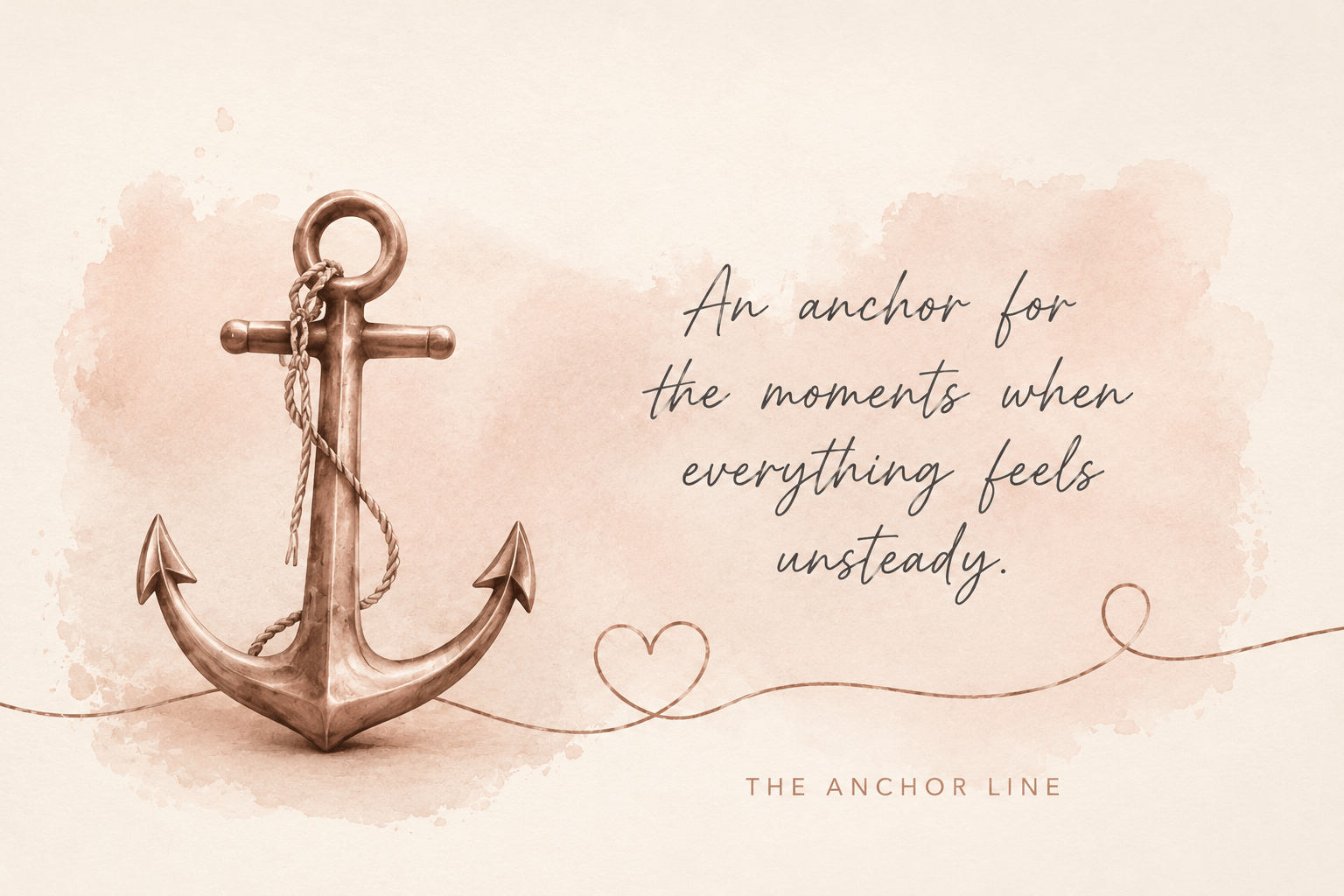
An anchor does not rush you forward. It simply helps you steady
It helps you make sense of your experiences
Some people need time before words come. Some people need space to think. Some people need to type, pause, breathe, read it back, and then decide whether they want to send it.
That does not make their need for support any less real.
In fact, I think it shows how much care we need to take when we offer support. We cannot assume that everyone feels comfortable with the same format. We cannot assume that a phone call feels simple. We cannot assume that a video session feels safe. We cannot assume that someone who goes quiet does not need help.
Sometimes the person who needs support most is the person who cannot ask for it loudly.
That is where The Anchor Line comes in.

But in real life, healing often starts much smaller.
I wanted to offer something steady and accessible. A place where someone could send a message without feeling they had to perform, explain everything perfectly, or have a full plan for what they needed.
Because sometimes the message is simply:
“I don’t know what to do.”
Or:
“I feel overwhelmed.”
Or:
“I just need someone to help me slow down.”
And those messages deserve care.
I did not build The Anchor Line to replace deeper support. I built it to create a softer first step. A bridge. A way for someone to reach out when talking feels too much, but staying alone with it feels too heavy.
There is something powerful about written words. They give us room. They do not rush us in quite the same way. They can help us name what is happening one sentence at a time.
For someone whose nervous system feels on high alert, that slower pace can make a difference.
A phone call may feel too exposing. A video session may feel too intense. Sitting across from someone may feel impossible. But sending a message from the sofa, the car, the kitchen table, or the edge of the bed may feel just about manageable.
And sometimes “just about manageable” is exactly where support needs to begin.

It can start with one honest sentence.
It can start with admitting, “I am not okay today.”
It can start with someone replying calmly, without judgment, without pressure, and without making you feel like a burden.
That is the heart of The Anchor Line.
I wanted to create a line back to steadiness. Not a place where anyone needs to have all the answers. Not a place where anyone has to tell their whole story. Not a place where anyone has to be “ready” in a polished or perfect way.
Just a place to begin.
Because when someone has been through trauma, control matters. Choice matters. Pace matters. Feeling believed matters. Being met gently matters.
I never want support to feel like another demand.
I want it to feel like a breath.
A pause.
A handrail.
A reminder that you do not have to carry the whole thing alone.
“Sometimes healing begins with one honest message: I’m not okay today.”

YOU MATTER
The name The Anchor Line
The name The Anchor Line felt right because an anchor does not drag you forward before you are ready. It does not shout instructions from the shore. It does not ask you to explain why the water feels rough.
It simply helps you steady.
And for many people, that is the first thing they need.
Not fixing. Not pushing. Not pressure.
Steadiness.
When I built The Anchor Line, I thought about the person who has spent all day pretending they are fine. The person who cannot cry until everyone else has gone to bed. The person who feels confused after a difficult relationship. The person who keeps replaying a conversation. The person who feels guilty for having needs. The person who wants support but feels nervous about booking a full session.
I wanted them to have another option.
A quieter option.
A human option.
A way to say, “I need support,” without having to say it out loud.
GENTLE SUPPORT
You do not have to keep working through it on your own.
Trauma-informed coaching can offer a calm, supportive space to reflect, rebuild, and move forward at a pace that feels safe for you. You can begin where you are.
WRITTEN BY LANA ELLIOTT
Lana Elliott is a trauma-informed life coach and wellbeing writer. Lana supports adults affected by trauma, difficult life experiences, and domestic abuse through calm, client-led coaching and gentle, trauma-informed resources.
LANA ELLIOTT WELLBEING

About The Author
